Resource Plan
Resource Plan Overview
The resource plan module is the mechanism by which resources are requested for both projects and proposals. It has the following key features:

| Feature | Details |
|---|---|
| 1. Add Resource | Enables the user to add either generic or named resources. |
| 2. Units | Specify the units displayed in the grid. |
| 3. Period | Select which period to view data for. |
| 4. Search | Search any content in the grid. |
| 5. Data | Export data and move resource requests. |
| 6. View | Change how data is presented in the grid. |
| 7. More | Refresh data and enable full screen mode. |
| 8. Actions | Open select resource, change resource request. |
| 9. Grid | View data such as, resource availability, scheduled effort, input proposed effort and committed effort. |
Features
Add Resources
This control enables the user to add resources to the selected project or proposal. This can be configured to enable selection of named only, generic only, or both types of resources depending on the organisations process.

Named Resource Availability Summary
When a Named Resource is selected from the list of available options, a breakdown of available hours for a resource based on the current view of the resource grid, see screenshot below for example:

This shows a monthly summary of assigned work and a summary of capacity for the selected period.
Fulfilment Resources
Where the resource manager has provided a fulfilment resource (named resource), these will show underneath the generic resource request that was submitted by the project manager. Requests with no proposed hours will show as blanks (see below):

Units

The resource grid displays data in Hours by default. However, you can select from several input modes:
Days: Enter effort in calendar days. The system automatically converts days to hours using the default calendar (e.g., 8 hours/day → 10 days = 80 hours). This mode is ideal for planners who prefer to allocate resources by days rather than hours. Row and column totals will display the total hours (not averaged like FTEs), and overall totals will be suffixed with "Days". Precision is accepted as per settings, and values are stored in hours. Granularity matches the pattern for hours (scheduled or capacity days/workdays depending on resource type).
FTEs: Converts the entered hours to a proportion of Full Time Equivalent (FTE) based on the default calendar. For example, if a full-time resource works 8 hours per day, 40 hours per week, then 20 hours would be shown as 0.5 FTE. This mode is useful for high-level planning and comparing resource allocations across projects or periods. Note: FTE totals are averaged, not summed, to reflect proportional allocation.
Capacity (%): Converts the entered hours to a percentage of the resource's available capacity for the period, based on their calendar and working pattern. For example, if a resource is available for 40 hours in a week and is allocated 20 hours, this will show as 50%. This mode helps visualize how much of a resource's time is committed versus available, supporting capacity management and avoiding over-allocation. Note: Totals are not available in Capacity (%) mode because each cell and row may be based on a different capacity value, so summing or averaging would not be meaningful.
Period
By default the resource plan will default to show the current month and the next two months. The user can use the period control to display a different period.

Search
This control enables the user the ability to search for any of the names, primary roles or other text based content in the grid:

Data Dropdown
The data dropdown provides the user with the following additional options:

- Export to Excel: This content of the resource plan can be exported to excel for further analysis.
- Shift resource requests: This enables all unapproved requests to be moved forward in time in bulk without having to move them individually.
View dropdown
The view dropdown provides the user with the following additional options:

- Period: This changes the granularity of data in the grid. Default is monthly but this can be changed as required (Year, Month, Week, and Day).
- Show/Hide: This enables the user to show/hide the columns and rows in the grid as required. Default is for all of these to be on except for "Full Column Heading".
- Filter Requests: Enables the user to filter to only see certain types of request (e.g., Unfulfilled Requests Only).
- Grouping: Enables the grid data to be grouped by Primary Role. By default, no grouping is selected.
Period Granularity
The period option in the view menu enables the user to specify the level of granularity which they wish to view resource plan data for. This option enables:
- Day
- Week
- Month
- Calendar Year
- Fiscal Year.

Learn more about Period Granularity here.
More dropdown
The more dropdown provides the user with the following additional options:

- Refresh: Enables the data in the grid to be refreshed. This can be useful if some requests have been approved and the project manager is still looking at stale data.
- Full Screen Mode: Pops out the resource plan to take up full screen. This makes it easier to see more periods of data.
Actions
Each row in the grid has an ellipsis next to it. This is where the following further actions can be undertaken:

- Open Resource: Enables the user to open the bookable resource record for the selected resource.
- Submit: Enables this specific request to be submitted individually (rather than all requests at once).
- Open Details: Opens up the request details.
- Replace Resource: Enables the resource plan owner to replace the selected resource with another resource. Note, this will require a new approval from the new resource's manager.
- Remove Request: Enables the request to be removed.
Grid
The grid in the resource plan enables an Excel-like experience for easy input of data. The grid has four key columns which cover off resource data:
- Availability (A): Highlights how available the selected resource is. If factors in other commitments that have been made and calendar exceptions such as Annual Leave. This column is read-only in the resource plan grid and cannot be edited.
- Proposed (P): This column is what the project/proposal manager can use to request hours for the selected resource.
- Committed (C): This column is read-only in the resource plan as this is set by the resource manager. Committed time is specified in the Resource Demand application.
- Scheduled (S): This column is read-only in the resource plan as this is fed by the Schedule (external or Altus Tasks). Learn more about how the Scheduled column works here

Hover Over Dialog
When a user hovers over a cell in the Availability Heatmap, the following dialog box pops up. This provides the user with further information so that they can make an informed decision about resource allocation:

If the period has been locked: within the Resource Heatmap grid, the Committed cell will be locked and show as N/A in Capacity (%) entry mode with a tooltip note and a warning icon to inform users why it has been locked.
When a resource with no capacity is committed in the Hours or FTEs entry mode, the Committed cell in Capacity (%) mode will show as red.
Create Resource Plan from Schedule
This feature allows you to quickly create a Resource Plan based on your Project schedule. It imports assignment information from Altus Tasks into the Resource Plan therefore creating a resource plan that mirrors the project schedule.
For more information on how to setup this feature please see here.
Workflows
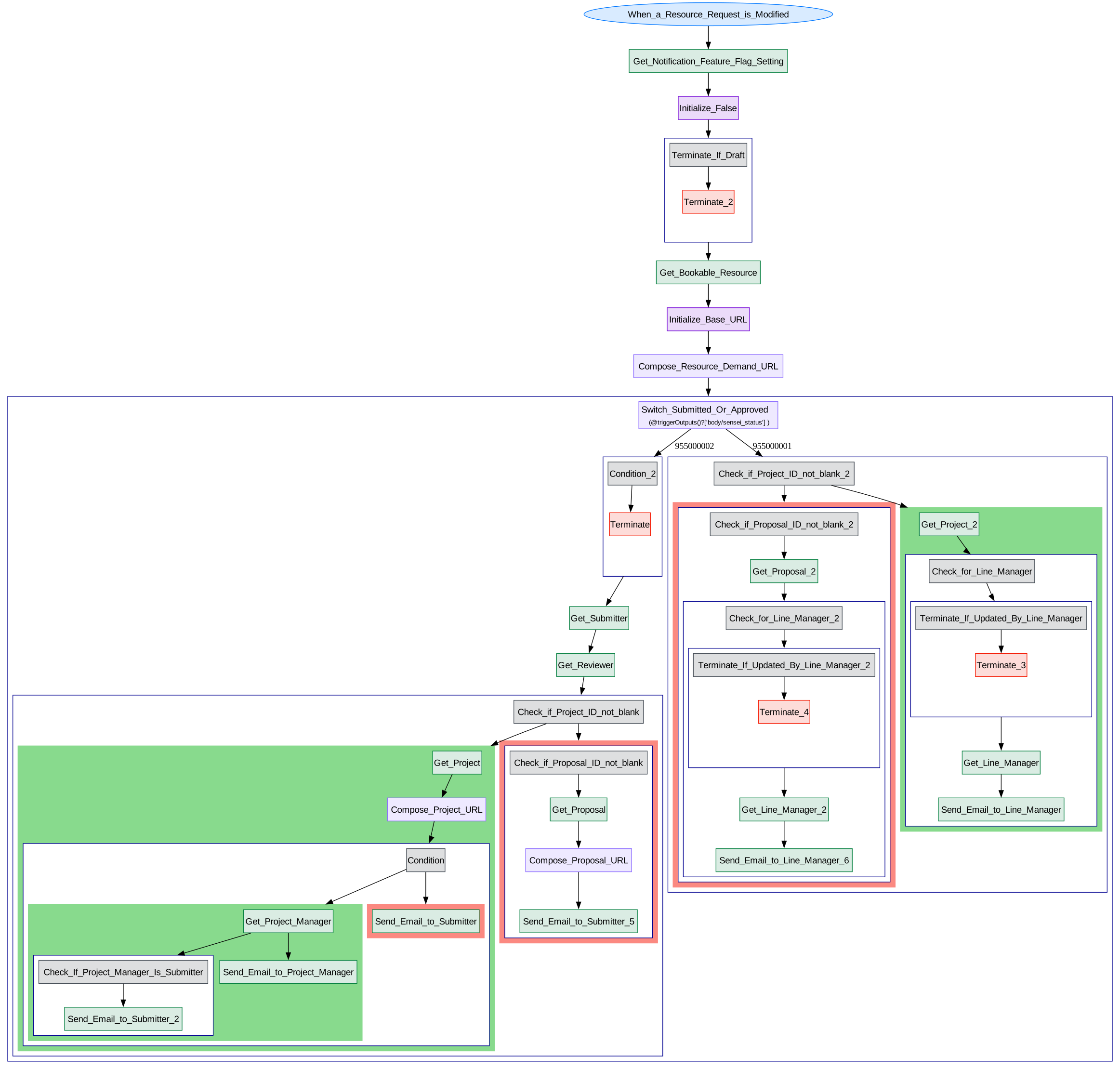
There is a notification workflow in Altus that notifies the project manager (project executive) of the results of their resource requests. This is detailed below.